Showing posts with label War. Show all posts

Sunday, April 5, 2009

The Deer Hunter, statistically speaking

***SPOILERS AHOY, in this post. If you haven't seen the legendary war film The Deer Hunter and plan on doing so, don't read on.***

Actually, what I really should say is: "If you haven't seen the legendary war film The Deer Hunter and plan on doing so, don't."

Oh, but how dare I take on such a beloved film?

Easy.

First, I must say I'm not just criticizing the 1978 Best Picture winner because it's reaaaaalllly long and not much happens in those three-or-so hours that I'm/you're never getting back. The story starts in a steel-mining Pennsylvania town, following five guys, three of whom are going to Vietnam soon. They ship, hell ensues, and all three become scarred forever, physically and/or mentally. It's an important point, of course -- and back in 1978, I'm sure it hit especially hard for veterans (and almost certainly still does) -- but did Michael Cimino & Co. really need all that time to say these things?

But no, my complaint isn't so much that. And it's not the gross geography FAIL that takes place -- where those Pennsylvania guys, out for one last deer-hunting trip, start out in the Appalachian Mountains ...


... then somehow warp over to Washington's Cascade Range ...


... which, as you can see, is a bit of a schlep:


View Larger Map


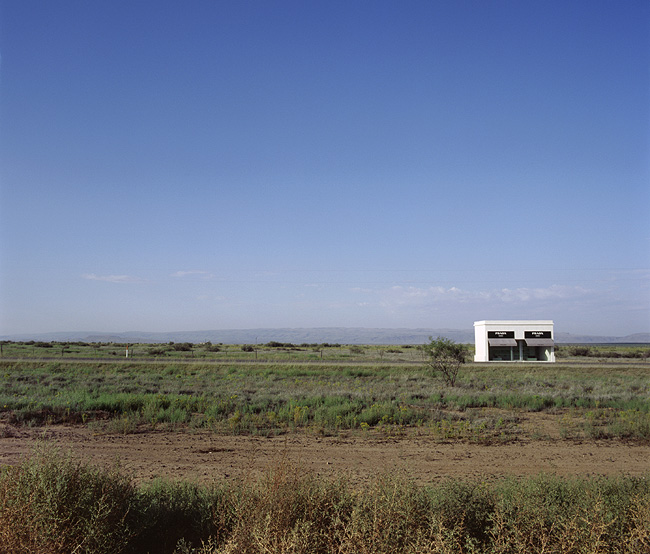
But it's not that, either. Heck, a lot of great films take place far away from where they're shot. In There Will Be Blood, the supposed California desert is really Marfa, Texas. So no, it's not that*.

*Good lord, I feel like I'm the Louise Lasser character in Bananas, explaining why I'm breaking up with Woody Allen.

Mainly, the problem is with the whole Russian Roulette thing. Not only is it a little weird, but statistically, it just doesn't add up.

It starts in a P.O.W. camp, where the Robert De Niro, Christopher Walken and John Savage characters are forced to play the dangerous game. They all survive, but the experience certainly sticks with them -- so much so that a crazed Walken* skips going back home and stays in Saigon ... to play Russian Roulette professionally.

*Walken? Crazy? No way!

Naturally, De Niro heads back to 'Nam to find his friend. He does, at one of these underground Russian Roulette halls, where Walken's about to give it another shot (haha).

Now, as Norm MacDonald once said about cliff divers, it's kind of hard to make a comeback as a pro Russian Roulette player. So we can assume that Walken has been quite successful to this point. But that just doesn't make a whole lot of sense, considering the amount of time he's been in the city.

Really, it takes simple math to reach this conclusion:

Assuming the referee spins after each shot, and there's only one bullet-filled chamber, that gives you a 1-in-6 chance of losing each game, and the odds don't change unless the circumstances (number of bullets, lack of spin between shots) do. Sure, that's not a bad percentage; each, uh, "attempt" gives you an 83.3% chance of survival. And no, we do not know how many nights Walken has played the game, nor how many shots he's been forced to take each night.

Still ...

Walken's referred to as "The Famous American," meaning he's got to be making frequent appearances at these games. But this, my friends, simply is not believable. What, he's supposed to be "good" at Russian Roulette? I mean, does he try harder or something? We're expected to believe that his flip of that six-sided coin has come up good EVERY time? And then, once he and De Niro finally meet up, and Walken FINALLY remembers that "one shot" line from earlier in the movie ... THAT's when Walken loses for the first time in his career?

Sorry, not buying it.

What? What's that you say? It's symbolic? It's mythical? I have too much time on my hands and I'm taking this too seriously?

Psssh. You're just saying that because you failed math or something.

But, if you must, you can have The Deer Hunter as the best Vietnam movie ever. I'll take Apocalypse Now, which not only is simply better, but -- most importantly -- it doesn't discard the laws of probability.

Thursday, April 2, 2009

Overlooked: Jacob's Ladder

Long before his most famous role*, Tim Robbins starred in a moody, atmospheric 1990 war(ish) drama called Jacob's Ladder -- which largely was overlooked at the time, but has something of a cult following nowadays.

*In this film.

It's about a guy (Robbins) who returns from Vietnam and is seeing ... weird things. He's not quite as fixated on the war as, say, this guy, but he still wants to know why he's seeing horned things at parties.

An oh, does he find out, in mesmerizing fashion.

Additionally, The Ladder seems to have influenced a lot of other gloomy, psychological mystery-type flicks. The 2004 Christian Bale-goes-anorexic film The Machinist comes to mind, although there's one from five years earlier that has major ending-related parallels ... although I won't reveal the film's name here, because doing so -- to paraphrase a highly NSFW motivational speaker -- would be just ... giving it away.

I won't review it further. These guys will:


Not to pick on the late Siskel, but I agree with Ebert. The Ladder's not quite a masterpiece, but there's a reason it has a solid 7.5 IMDB user rating*.

*Bonus points for appearances by George Costanza, Rick at Whammyburger, the heir to the Soul Glo fortune and K.G.

Saturday, March 14, 2009

Atonement

*Note: This is another installment in The Film Official's not-quite-a-series series on films from 2007. Eventually, there might be a whole post that celebrates a movie year which, by comparison, slapped 2008 around like, I dunno, this?


Atonement deserves a lot of credit for not sucking.

Obviously a lot of it should go to Ian McEwan, the dude who wrote the book on which the film was based*.

*I haven't read the book, here's a review of it from ESPN.com baseball analyst/book junkie Keith Law. Beware -- spoilers aplenty.)

The story starts at an English mansion somewhere (sorry -- it all looks the same to me), but luckily the book/film isn't a typical Costume Party for the Rich, not for the duration. Even the well-to-do characters end up elsewhere, and in tough situations. Some are self-imposed, some most certainly are not self-imposed, as -- in this Best Picture nominee -- a poor kid (James McAvoy) gets quite the shaft from a lovestruck young girl (Oscar nominee Saoirse Ronan early, two other actresses later) who is jealous of McAvoy's forbidden relationship with her sister (Keira Knightley).

But this isn't one of those Merchant/Ivory-type snooze fests -- which, in the words of a person close to me, are little more than "stuffy British melodramas." Not quite. After that melodramatic setup and its main plot point (which involves a word once used to describe Larry David's wife's beloved aunt -- that link is most definitely NSFW), a good deal of the story exists on battlefields and in a wartime hospital and other not-so-glamorous places.

Like I said, it's still pretty melodramatic: Heavy issues -- true love, betrayal and, of course, atonement. Not much levity here. Some VERY SERIOUS conversations and confrontations, the kind that only seem to happen in fiction*. And lots of war-is-hell elements -- which sorry to say, are ordinary and played out**. In all, despite the film's surprisingly short two-hour runtime, it still seems a little lengthy, a bit bulky.

*Then again, considering how Atonement ends, there's something to that fact.

**Seriously, war is bad? I had NO idea.

Again, though, it doesn't suck. From the start you can tell it's different -- that aforementioned word clues you in that there's not an overwhelming sense of "proper," which is what drags a lot of these British Upper Crust movies down. The way it's filmed* -- director Joe Wright uses some creative devices, cinematographer Seamus McGarvey crafts some undeniably beautiful images, and Dario Marianelli's Oscar-winning score is unusual (the main character is a writer, and a typewriter's click cleverly serves as percussion in several places) -- also is an asset.

*I must say, though, while it's a remarkable achievement cinematically, that 5 1/2-minute tracking shot left me wondering: Yeah, but ... so what?

Then there's the ending, which gave the book's critics (at least the aforementioned Keith Law) a lot of pause. It involves an unusual narrative device -- I won't spoil it here -- but I can see why it left some angry, especially in written form. Strangely, in the film version, it kind of works. Movies so often are saddled with cheesy, cop-out Hollywood endings where everything gets settled neatly and cleanly. Atonement's, though -- even if it is, shall we say, told and not shown -- does not follow that pattern. Although a similar device was used far more cleverly in Adaptation (my personal vote for the best film ever, BTW), Atonement deserves points for not turning itself into fairy tale (and ... fade to black with swelling, happy music!) or simple climactic tragedy (and ... fade to black after the horrible final incident).

Oh my God, I think I just talked myself into liking this movie*.

*Still, in the context of 2007, it's not even remotely top-10. Stay tuned ...