Showing posts with label Oscar Nominees. Show all posts

Tuesday, May 26, 2009

The Elephant Man

Sample titles for this blog post, which were scrapped because I couldn't decide on just one:

The Elephant Man: David Lynch, without all the nonsense

or

The Elephant Man: The *real* Best Picture of 1980 (or at least better than the consensus top film)

or

The Elephant Man: Why, again, isn't this considered an all-time great by outfits like AFI?

Yes, friends, this stylized account of the life of Joseph Merrick (mistakenly known as John Merrick) is that good.

(Cinema Scope with the pic)

What's brilliant about The Elephant Man -- the story of a deformed former circus sideshow (John Hurt) who takes up residence in a London hospital thanks to a curious doctor (Anthony Hopkins) and becomes something of a high-society curiosity -- is its breadth of style and substance.

It's got director Lynch's impeccable craft -- e.g. that mid-film dream sequence -- but ditches his typical nonsensical storyline for a thoughtful tale told at a measured pace. It's equally bright and dark, showing the best of humanity and the worst -- and all those moral gray areas, too. And when the film reaches its almost inevitable conclusion, it is simultaneously happy and sad, bringing about the urge to cry ... for some reason, although it's hard to peg exactly why.

Heartbreaking? Heartwarming? Try both. Or how about this: It's heart-tugging -- easily one of the most emotionally affecting films out there.

So why, again, does this one get so often shafted in the annals of film history?

Wednesday, May 13, 2009

The king of all ...

... cheesy horror films:

(Pic from hollywood.dcealumni.com)

OK, cheesy might be a little unfair, because when I say "cheesy horror films," you (likely) say "Jason!"*

*When I say "sportz," you say "nutz" ...

But there's a difference between the truly, icky, awful, terrified feeling you get when you watch an unrelenting piece like Texas Chain Saw Massacre (the original ... duh) or Alien. Those are small, contained situations -- a house in the middle of nowhere, a space ship -- and neither has grand ideas nor many supernatural qualities.

Typically, when you enter the realm of Satan or 666*, there must be some sort of suspension of disbelief, since the concept of EVIL incarnate is, well, slightly silly.

*Episode 666 is an exception here.

So here we go, with The Omen, a 1976 offering (again, not the remake) from Richard Donner and Atticus Finch himself, Gregory Peck. Peck plays Thorn, a politician whose son, Damien (Harvey Stephens), is no more his son than I am. Instead, their relationship spawned from an under-the-table adoption ... and it ain't workin' out so hot for our protagonist. Because, well, Damien is the Antichrist, and Thorn (with the help of a suspecting photog played by David Warner's incredible accent) must stop the little devil (haha) by killing him. Which kinda makes dad a little uneasy, what with the moral repercussions of offing a kid and all.

The film has its share of unintentional comedy, but it seems to know it ... if just barely. Everything is played straight, but you get the sense that, deep down, everyone's winking at you (or smiling, as it were ... if you've seen the ending, you know what I mean).

Then there's the film's strongest quality, and I'm not talking about the totally badass decapitation scene (yeah, don't click on that one, all you squeamish types). IMDB's trivia section for The Omen says the following:
Director Richard Donner credits the success of the film to composer Jerry Goldsmith, whose music made the film scarier than it would have been had he not been involved.
Totally. Agree.

Goldsmith won an Oscar for his work here. In a cheesy horror movie. That's how good the score is.

Enjoy:

Monday, May 11, 2009

Beautiful ...


... just beautiful* ...

*No, I'm not referring to the dude in the tub.


... did I mention beautiful?


I've dropped this movie's name enough in previous posts, so it's about time I give The Assassination of Jesse James by the Coward Robert Ford (deep breath) its what-for.

As I write this, I'm not sure Assassination is at all inferior to 2007 shoulda-been Best Picture Winner There Will Be Blood. I am sure it's superior to the one that actually won the award (more on No Country here).

Why? I posted three elements above: The gorgeous cinematography (by Roger "How the #$%& Hasn't He Won an Oscar?" Deakins), the interplay between Brad Pitt (as James) and Oscar nominee Casey Affleck (as Ford)*, and the chills-inducing score by Nick Cave and Warren Ellis (which didn't even get nominated). But those, like I said, are just elements. The whole is just as good.

*Although the rest of the cast -- especially the ever-excellent Sam Rockwell -- isn't far behind.

Strangely, I would only recommend Assassination to a select group; it was box-office poison, and for once, it's easy to see why: It's slow and long (160+ minutes), and if you don't buy the pace, you're gonna hate it. But if you're of the right mindset, there's just something hypnotizing about this story of early hero worship and celebrity (which, incidentally, is not unlike writer-director Andrew Dominik's only other, aforementioned, film, Chopper), as the aging outlaw James drifts through the downside of his train-robbing career -- with the ambitious, voice-cracking young Ford tagging along and, ultimately, doing away with his idol.

Getting euphemistic, I'll say the plot unfolds "methodically" and also episodically, but I'm not sure anything could/should have changed. Every frame seems perfectly placed, and not just aesthetically*. The dialogue, too, seems spot-on, allowing the story to advance without any sense of contrivance.

*The Film Official Challenge: How many words can I use that end in "ically"? Technically, I say four. At least in these two grafs.

The result: When Ford finally shoots James, you know absolutely why (at least in the context of the film), but without being beaten over the head with reasons. Also, you know the heroism eventually given Ford is not one found in fairy tales -- not one that will end happily, but not like the stuff of phony tragedy, either.

If the story sounds literary, that's because it is. The opening scene -- and various parts throughout -- are narrated as if being read from a book (perhaps this book). That narration is a useful tool, filling in blanks that often go untold in poor adaptations of subtext-heavy novels. In the end, everything is understood, everything is felt, everything is ... beautiful, even if tragically* so.

*Yep, another "-ically"!

Friday, May 8, 2009

Donnie Brasco

(Not so) fresh from the underwhelming film year called 1997, comes a nice little mob movie ...

(Photo pulled from my browser's home page)

It's not brilliant, Donnie Brasco -- the based-on-a-true-story story of an undercover FBI man (Johnny Depp) who infiltrates a segment of the New York mafia through a likable small-time hood (Al Pacino; rarely has he been better). It's small and subdued and sometimes slow. But it gets most things right*.

*Even Anne Heche's Nagging Wife character ends up serving a purpose, rather than just being there so the filmmakers could create a large female role without having to exert themselves too much in the writing process.

What's best is that it never sensationalizes, never romanticizes*, and never becomes slave to a derivative plot. It's not as purely gripping/intense/brilliant as Goodfellas, the greatest of all mob movies, but it's not trying to be. It's a character study first and last, a study of two guys who are mostly decent despite this world of crime surrounding them.

*Unlike one of the most overrated movies of all time.

The cast works well, too, beyond Depp and Pacino and Heche -- best among the bit players are Paul Giamatti and Tim Blake Nelson as FBI operatives. Also, Brasco deserves points for not letting the Michael Madsen character (a quasi-boss) become a stunt casting; he so easily could have turned into a vicious Mr. Blonde, but instead he's just another mafia honcho with understandable anger issues.

Sure, as movies go, the mob scene is pretty much played at this point. But as long as they're made thoughtfully, like Brasco, the genre needn't be completely closed to submissions.

Thursday, May 7, 2009

The Adventures of Priscilla

As those (aforementioned) New York Times memos lamented, there's an issue with the way gays are portrayed in film. Obviously, it's in the stereotypes.

Stereotype No. 1: They're fairy-sissy-boys or beer-swilling biker-dykes whose sole purpose is to provide some sort of punchline. Funny? Sometimes. Sometimes quite. Other times ... not so much. You can make fun of anything -- and I mean a-ny-thin-guh -- if you do it right. Too often it's not done right.

Stereotype No. 2: Unmentioned by NYT but still frustrating -- uber-tragic figures whose existences are so horrifically bleak that they might as well kill themselves (see: The Hours). Realistic? Almost certainly. But these character types exist across sexualities, races, economic statuses, etc. -- and almost always, they're painful to watch*.

*And not the rewarding kind of painful. Just the painful kind.

Kudos to films that avoid these. Films like Brokeback Mountain, which had the unfortunate flaw of being boring, or Milk, which had sympathetic characters but simply pathetic narrative and dialogue. One that hits it on all fronts, though, is The Adventures of Priscilla: Queen of the Desert, an Australian camp classic from 1994.

(Photo from the Sydney Morning Herald)

Priscilla is a bus. Its drivers/occupants are an Australian drag queen duo (Guy Pearce and Agent Smith himself, Hugo Weaving) and a bereved transsexual (Terence Stamp) who are heading from Sydney to remote Alice Springs for a show. The story's a little thin, but the trio (and the folks they meet along the way -- friendly or very unfriendly) keep things interesting most of the time. The dialogue is sharp. The Oscar-winning costumes are great ... and I'm not a bloke who cares much about costumes. And as a desert-lover, I'll never get tired of rocky, dry vistas.

But extra points because these characters never fall into neither gay stereotype category, despite the fact that they're clearly flaming and there's a lot of hate in that there Outback. They're instantly likable, even the obnoxious Pearce -- and not in a condescending, "Aren't those gay people cute?" kind of way. They're sad at times but never incomprehensibly depressing. They're, ya know, people.

Yes, that's right. Real characters, not stereotypes or stunts. What a concept! We'd be better served if all movie characters -- gay or straight or anything in between -- were like this.

No Country to (re)visit

"When the facts change, I change my mind. What do you do, sir?"
--John Maynard Keynes

Two things: 1) Don't ask me who Keynes was. Wait ... *checking Wikipedia* ... OK, so now I know he's Tool's frontman. No, wait. I think that's this guy. I get confused sometimes.

2) There aren't really facts, here. Just a re-visitation of 2007's Best Picture winner, more than a year after seeing it for the first (and previously only) time. My impression back then: A harrowing, intense movie that seemed quite excellent ... except something always nagged at me, even as No Country for Old Men swept the Big Oscars, over the film I voted for (after swiping Tom Berenger's ballot).

At the time I thought that nagging feeling was No Country's surprisingly open-ended conclusion, or maybe the knowledge that I paid like $10 to park on South Beach in order to see the movie.

Now ...

(This perfectly sized poster found at tutor2u)

... now, it's clear: No Country is gripping, exceptionally crafted -- and almost fatally flawed.

The flaw is in the story.

It's not hard to see No Country is about far more than a Texas welder (Josh Brolin) who discovers $2 million that "belongs" to a psycho killer (Javier Bardem) who is being trailed by an almost burned-out sheriff (Tommy Lee Jones). The sheriff's opening voiceover -- never to return -- lets us know we're after something deep. Occasional life-related musings by a number of characters point to the nature of the world, of evil, of fighting it, of fighting for yourself, for others, etc. This is heavy stuff here, even without all the vicious killing (most of it done by the Oscar-winning Bardem's character).

Which is fine. Films don't always have to make big declarations, but those that do sometimes reach legendary status, as No Country apparently did.

But ...

Those Big Idea films almost always take two paths to get there: 1) They state their thesis within the framework of a believable narrative, or 2) They present the issue with a tone of surrealism or magic realism or something that very clearly says "Suspend disbelief, everyone -- we're going for a ride."

No Country does neither. It wants to be gritty and intense and to exist in this world (or at least this world, circa 1980), but eschews logic while advancing its narrative and making its point. Too many actions/events make too little sense (Example: How does every character seem to know where his target is, almost at all times?)

Really, it's more a philosophical essay than anything else. Again, that's fine -- as long as you're not masquerading as a story. Otherwise, it's all allegory and little else. For some, that might work. Obviously, it did for Oscar voters and critics.

Not for me, though. It left me wondering if Cormac McCarthy's book filled in those plot holes, explaining all those moments of wondering "But wait -- how did he ... ?" and "How could they know ... ?" and so on. It left me pining for some of the Coen Brothers' previous gems, which said a little something about life AND told near-flawless (or acceptably oddball) stories.

It left me feeling conflicted. On one hand, it's good that the Academy honored a film so wholly different from the Best Picture stereotype, something that was dark and not afraid to be cruel and viciously clever. On the other, the aforementioned There Will Be Blood was right there with No Country, just as dark and just as clever and far less flawed -- begging Oscar to pick it, but with no success in the Most Important Category.

Tuesday, May 5, 2009

Random Cinco de Mayo thoughts

*Note: This post has absolutely nothing to do with Cinco de Mayo.

Randomly, some thoughts, brought to you by the free wireless internet at FLL:

-Roman Polanski is in the news again. Idea: How about if he doesn't show up at the hearing, his Oscar (for the underwhelming The Pianist) is revoked and passed on to its rightful owner. Or at least this guy. Or even this one.
(Exclusive: The last known rendering of Polanski in the U.S.)

-From the world of music: Concept albums haven't really translated well into film -- see Tommy and Pink Floyd: The Wall -- but I'm at least a little intrigued by a supposed screenplay based on progressive rock/metal outfit Mastodon's latest epic, Crack the Skye.

(Would this make a good movie poster?)

-From the world of sports: I thought my initial thoughts on this movie were all original, then I read that ESPN writer Bill Simmons made essentially the same claim in his latest column. Damn. Still, Spike Lee's latest documentary, Kobe Doin' Work, might be less based in reality than, say, the latest P.O.S. comic book movie. If you think politicians are full of it when they speak publicly, you ain't heard much Kobe Bryant.

Sunday, April 26, 2009

Score another one for 2007

Continuing my ongoing assertion that 2007 was one of the best film years ever -- if not the best ... When you look at this list and realize The Bourne Ultimatum isn't even in the top dozen or so, you know it was a good 12 months.

But my overall 2007 post will come later. This is about Bourne.

(Nice pic at DesktopNexus.com)

What's interesting about Ultimatum is it always seemed like such a yawner. The whole series did, really -- that's why I skipped the first two installments. The standard spy/CIA/government/black ops action stuff ... woo. And at its core, that's all Ultimatum is. That's why it could never be truly awesome -- straight-line actioners rarely (if ever) are, IMO. Action is just lost on me, mostly.

Still ...

Kudos to Ultimatum for not only working as a stand-alone (if you haven't seen the first two installments, it's no big deal), but also taking its premise -- brainwashed super-assassin Jason Bourne (Matt Damon*) tries to figure out who he really is and get back at the people who made him that way -- and just running with it. Not much setup or exposition. It gets right to it.

*Maaaatt Daaaamon!

It's rarely excessive in its straightforward, French Connection-type approach (although that chase through Tangiers is a bit much). Most notable, though, is its incredible craft. /Film, listing its 10 most influential films of the last 10 years, wrote this:

The Bourne Ultimatum is on the list for exemplifying and honing two different things: the ‘running man camera’ action scenes, which is now the norm; and the rapid-fire cross cutting between an alarming amount of different angles. Paul Greengrass and Christopher Rouse go down in history for finding a way to assemble a record-breaking variety of coverage in a way that is comprehensible to the audience. I would explain how it works, but it’s mighty geeky and a little bit technical.

Yes, it's an absolute clinic on film editing (speaking of geeky and technical), which is why Rouse (deservedly) won the Oscar. Also, the aforementioned Greengrass might be one of the most technically gifted directors working today*.

*More proof: United 93. If I were to make a list of the 10 greatest films -- and I mean of all-time -- that one would receive a ton of consideration.

Which is why, even if you're not an action lover, it's hard not to get something out of Ultimatum. And if you're one of those who eats up action films like I love comedy and horror, then -- well, then you've probably already seen Ultimatum like 100 times by now and are pre-purchasing tickets for Bourne No. 4.

And who could blame you?

Saturday, April 25, 2009

Raging Bull is overrated.

*Note: I wrote this a while back and held off on posting it, but with EW.com's release of the 25 Best Biopics Ever -- and subsequent placing of this film at No. 1 -- I couldn't stop myself.

(Pic found at this site)

JOEY: Psst. You know we got everybody fooled, right?
JAKE: Whatchutalkin' 'bout we got everybody fooled?

JOEY: Ya know, how everyone thinks we're in this all-time great movie?


Yeah, that's right. Raging Bull -- a.k.a. the American Film Institute's fourth-best movie ever made, a.k.a. one of Time's 100 greatest, a.k.a. the No. 6 movie in the Sight & Sound Directors' Top Ten, a.k.a that top-ranked biopic, etc., etc. -- ain't all it's cracked up to be.

Now, there's a saying about Shakespeare that he has to be overrated because he can't possibly underrated -- and that kind of applies here. Seriously, Google "raging bull" and overrated and read the comment under the link with "DVD Talk Forum."

(Waiting ...)

Ouch.

Yeah, so treading on Raging Bull is trampling sacred ground.

But that doesn't mean we're dubbing Martin Scorsese's legendary film "bad." Its craft -- especially the editing of those boxing scenes -- is, of course, impeccable. Robert De Niro's performance as enraged boxer Jake LaMotta ... well, I wouldn't be the first to say it's very, very good. Joe Pesci (as LaMotta's long-suffering brother) and Cathy Moriarty (LaMotta's long-suffering wife) are fine, too.

Still ... exceptional filmmaking/acting don't make for an exceptional film. There's the little issue of story, and Raging Bull's goes something like this:

-LaMotta starts out an a-hole.

-He surrounds himself with a-holes.

-He becomes a successful boxer ... but an even bigger a-hole.

-His a-holeness catches up with him, so he ends up a fat, outcast a-hole.

Now, it's a character study, meaning plot is secondary. Fine. But character studies need arcs to make them compelling*. Not every protagonist must be a saint, or even likable. But there's gotta be something there, some sort of conflict -- and endlessly running around saying "Did you [bleep] my wife?" doesn't count.

*Even the dull Capote had a considerable character arc.

That's what keeps Raging Bull from reaching the heights of another character-driven Scorsese flick, Taxi Driver. Neither features lovable protagonists, but Travis Bickle's slip into insanity is far more gripping, IMO, than the simple tale of a jerk staying a jerk.

Friday, April 24, 2009

Revisiting Capote ...

... and wondering why.

(Rotten Tomatoes with the pic.)

Back in 2005 -- when Capote hit theaters, wowed critics and grabbed the biggest of all Oscar nominations -- I almost fell asleep watching the step-by-step retelling of how author Truman Capote came about his signature book, In Cold Blood.

Of course, I was in college then. Maybe I was tired from studying*. So I gave it another chance recently.

*Hahahahaha.

Nope. Still boring.

Now, it's not bad. Obviously the acting is excellent, especially Best Actor everwinner Philip Seymour Hoffman in the title role and Clifton Collins Jr. as one of the men who so infamously murdered a Western Kansas family in 1959. Director Bennett Miller crafts the film together cleanly and quietly.

And yet ... so what? Why are we watching this? The story on the pages of In Cold Blood -- captured documentary-style in writer-director Richard Brooks' fantastic 1967 adaptation of Capote's book -- is engrossing. The story behind it -- about the author balancing the book and his personal feelings for Collins' execution-bound character -- not so much. There's a point there, something about a writer getting too close to his work and ultimately becoming affected by it, but is it really worth the two hours?

TFO says no.

But hey, at least it's still better than the movie that beat it for Best Picture.

Tuesday, April 21, 2009

Wrestler/Frost/Nixon: 2 films, 1 problem

It's funny how* the two Oscar-nominated films hitting DVD shelves today suffered from, essentially, the same problem -- one that kept them in the good-not-great category (and, consequently, provided one more reason why 2008 was pretty eh as a movie year).

*/Life turns out/The odds of faith in the face of doubt/Camera one! ... Jeez, who else remembers that song from like eight years ago? Anyone? Just me? OK.

Those two are Frost/Nixon and The Wrestler, a Best Picture nominee and a critical darling (although F/N didn't do so badly with the scribes, either).

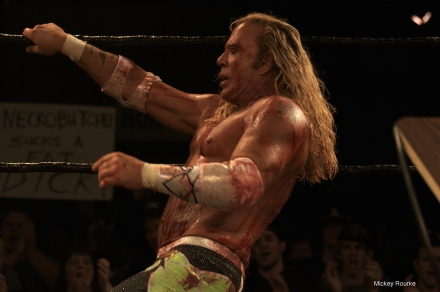
And yet ... consider me underwhelmed. Sure, the acting is great in both -- Frank Langella (F/N) and Marisa Tomei (Wrestler) both deserved their nominations, and Mickey Rourke (Wrestler) would have won Best Actor if the Academy hadn't been too busy playing politics.

But about that storytelling ...

Let's go with F/N first -- one that stirred my fellow journalists with its portrayal of a fluff TV guy who somehow extracted the Big Confession from Richard Nixon long after he left the White House.

(The Economist with the photo)

As a (semi) true story, it's fascinating. You really root for the David Frost character (played competently by Michael Sheen*) to beat the odds and get the bombastic Nixon (Langella) to offer much more than musings on his time in office. Also, Nixon is portrayed in an unusually sympathetic way -- which might not align with one's political leanings, but at least it's different.

*Not to be confused with Martin Sheen, not to be confused with Martin Freeman, not to be confused with Morgan Freeman, not to be confused with aging stock car driver Morgan Shepherd.

The issue, though, is storytelling. Director Ron Howard and writer Peter Morgan breeze through the proceedings with little originality. All the narrative rhythms -- the highs, the lows, the scene in the backyard where Frost tells his crew, "If you're not with me on this, then leave!" -- all of it felt so ... ordinary. We know Frost will get the Big Confession, so why try to play with our emotions like that*? Why not eschew conventions, like a certain other TV journalist movie did?

*One more complaint: For God's sake, Ron ... KEEP THE CAMERA STILL. This is David Frost we're dealing with, not Jason Bourne.

And then there's The Wrestler ...


(/film with the assist)

Among other things, Darren Aronofsky's relatively straightforward movie about a pro wrestler seeking redemption (in his career, in his love life, with his estranged daughter), received praise for not being formulaic. I disagree.

**MILD BUT VAGUE SPOILERS**

Sure, the film's ending it's not the Hollywood happy one everyone might expect, but it's formula of a different kind. Instead of fairy tale, it's predictable tragedy. And almost every frame of the film points in its direction, seeming to follow a by-the-numbers story pattern. The conclusion, to me, seemed as calculated as Slumdog Millionaire's happy ending.

d. It is written.

And although some preceding parts are terrific -- the first (and less violent) scene in the ring was among the best in '08 -- several other elements are as familiar as pro wrestling is fake: The estranged daughter. The stripper with a heart. The day on the boardwalk. The take-this-job-and-shove-it moment. Been there, seen it.

Do they ruin The Wrestler? No. Nor did F/N's issues render it bad. They just needed something different, something more, to reach greatness. Instead, each took an easier path to make their points.

Really, that last sentence pretty much sums up (most of) the films of 2008.

Paging 2007 ...

Sunday, April 5, 2009

The Deer Hunter, statistically speaking

***SPOILERS AHOY, in this post. If you haven't seen the legendary war film The Deer Hunter and plan on doing so, don't read on.***

Actually, what I really should say is: "If you haven't seen the legendary war film The Deer Hunter and plan on doing so, don't."

Oh, but how dare I take on such a beloved film?

Easy.

First, I must say I'm not just criticizing the 1978 Best Picture winner because it's reaaaaalllly long and not much happens in those three-or-so hours that I'm/you're never getting back. The story starts in a steel-mining Pennsylvania town, following five guys, three of whom are going to Vietnam soon. They ship, hell ensues, and all three become scarred forever, physically and/or mentally. It's an important point, of course -- and back in 1978, I'm sure it hit especially hard for veterans (and almost certainly still does) -- but did Michael Cimino & Co. really need all that time to say these things?

But no, my complaint isn't so much that. And it's not the gross geography FAIL that takes place -- where those Pennsylvania guys, out for one last deer-hunting trip, start out in the Appalachian Mountains ...


... then somehow warp over to Washington's Cascade Range ...


... which, as you can see, is a bit of a schlep:


View Larger Map


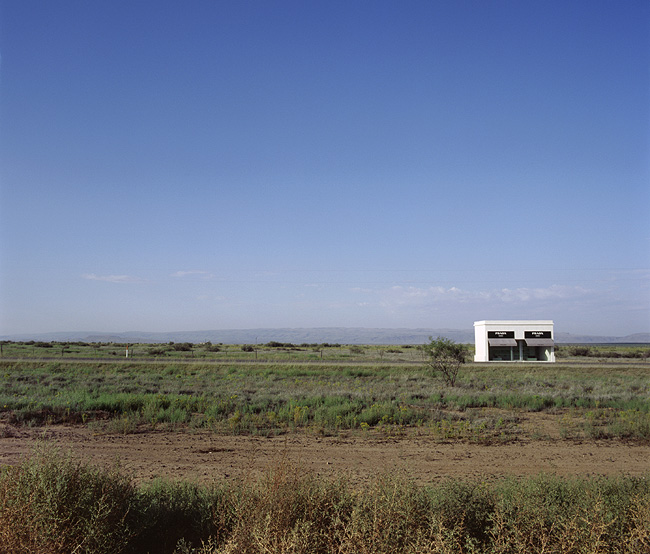
But it's not that, either. Heck, a lot of great films take place far away from where they're shot. In There Will Be Blood, the supposed California desert is really Marfa, Texas. So no, it's not that*.

*Good lord, I feel like I'm the Louise Lasser character in Bananas, explaining why I'm breaking up with Woody Allen.

Mainly, the problem is with the whole Russian Roulette thing. Not only is it a little weird, but statistically, it just doesn't add up.

It starts in a P.O.W. camp, where the Robert De Niro, Christopher Walken and John Savage characters are forced to play the dangerous game. They all survive, but the experience certainly sticks with them -- so much so that a crazed Walken* skips going back home and stays in Saigon ... to play Russian Roulette professionally.

*Walken? Crazy? No way!

Naturally, De Niro heads back to 'Nam to find his friend. He does, at one of these underground Russian Roulette halls, where Walken's about to give it another shot (haha).

Now, as Norm MacDonald once said about cliff divers, it's kind of hard to make a comeback as a pro Russian Roulette player. So we can assume that Walken has been quite successful to this point. But that just doesn't make a whole lot of sense, considering the amount of time he's been in the city.

Really, it takes simple math to reach this conclusion:

Assuming the referee spins after each shot, and there's only one bullet-filled chamber, that gives you a 1-in-6 chance of losing each game, and the odds don't change unless the circumstances (number of bullets, lack of spin between shots) do. Sure, that's not a bad percentage; each, uh, "attempt" gives you an 83.3% chance of survival. And no, we do not know how many nights Walken has played the game, nor how many shots he's been forced to take each night.

Still ...

Walken's referred to as "The Famous American," meaning he's got to be making frequent appearances at these games. But this, my friends, simply is not believable. What, he's supposed to be "good" at Russian Roulette? I mean, does he try harder or something? We're expected to believe that his flip of that six-sided coin has come up good EVERY time? And then, once he and De Niro finally meet up, and Walken FINALLY remembers that "one shot" line from earlier in the movie ... THAT's when Walken loses for the first time in his career?

Sorry, not buying it.

What? What's that you say? It's symbolic? It's mythical? I have too much time on my hands and I'm taking this too seriously?

Psssh. You're just saying that because you failed math or something.

But, if you must, you can have The Deer Hunter as the best Vietnam movie ever. I'll take Apocalypse Now, which not only is simply better, but -- most importantly -- it doesn't discard the laws of probability.

Saturday, April 4, 2009

Don't forget ... The Sting

Cinephiles and Oscar historians know it, sure, and probably know it well. But those who don't obsessively gobble up films like this writer downs Ezekiel 4:9 bread might not be as familiar with 1973's Best Picture winner, The Sting.

Which is weird, because it's got poker*. Sure, it's not Texas Hold 'Em, but cut these guys some slack. The movie's set in 1930s Chicago. If memory serves, Texas Hold 'Em wasn't invented until, like, 1941. In Minnesota, I think**.

*And the poker clip here is just the start of the sting, so don't worry about spoilers.

**That's not even remotely true. Here's
Wiki's take.


Oh, right, about the movie: The Newman/Redford vehicle is endlessly entertaining, clever, and takes the audience on a ride with it. It's not BIG like some of the other '70s legends, and it's not action-packed like many of its gritty crime contemporaries. It doesn't even much feel like a '70s film, just a timeless story about a pair of con men playing a deserving sucker (a pre-Jaws Robert Shaw).

Really, it's an early version of today's smart guys vs. big money movies -- movies like, say, this one. And who doesn't like those, at least when they're done well*?

*A: Weirdos.

Plus, ya gotta love the Scott Joplin ragtime music, even if it isn't exactly timely for the 1930s.

Tuesday, March 31, 2009

New on DVD: City of Slumdog Millionaire Gods

Out on shelves today, it's City of -- oops, I'm sorry, I got last year's Best Picture winner confused with this film:

(NSFC -- Not Safe for Chickens)


But hey, at least I'm not the first one to make the comparison. Guess it's easy to confuse a film that's set in a non-American slum and opens in the present day before flashing back years to a scene where the protagonist is failing at playing sports with ... another film that's set in a non-American slum and opens in the present day before flashing back years to a scene where the protagonist is failing at playing sports.

(Deep breath ...)

Anyway, not to Jai on Slumdog's Ho (that sounds dirty) -- and not to insinuate that the more recent flick is a total ripoff (the tones clearly are different) -- but it's unfortunate that the lesser of these two has been immortalized by the Academy while the other ... well, it had some pretty tough Oscar competition back in '03, so we'll let that slide.

My point is, dude, here's my point: If you're in the mood for something that's more than a simple fairy-tale love story*, try the darker, edgier Cidade de Deus (City of God).

*... that doesn't make much sense. Why, again, was Jamal so in love with Latika? I must have been texting while the characters explained that part.

If not, Slumdog's fine. It looks good, sounds good, and is exciting enough. But that love story ... I'll bet you it's no accident that the final frames of this clip came not from the movie that won the big award.

The Oscar Repo Man: Best Picture, '95

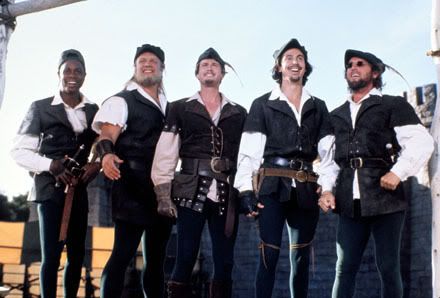
Note: We here at The Film Official considered calling this The Oscar Robin Hood -- as in: rob from the rich and give to the snubbed -- but decided against it because 1) we might soon be in for some Merry Men overkill*, and 2) we didn't want to be confused with any of these guys.

*No, not Overkill**.

**Wait, can I add italicized asides to an already-italicized aside***?

***I guess so.

Anyway, as is the right of all the filmically inclined, it's time to repossess an Oscar and give it to its rightful owner. Today's target: 1995 Best Picture winner Braveheart.


Yes, Mr. Wallace, we might not be able to take your freedom, but we're taking your Oscar. Why?

First, can any non fanboy/fangirl honestly remember anything except that one famous line and all the blue paint*? I mean, I just looked at the cast again, and I don't even remotely recall Brian Cox being in this movie. And I love Brian Cox**!

*OK, OK, I'll admit it -- I remember a certain scene involving this actress, too.

Secondly, the real culprit behind this movie's big Oscar win was the Best Picture category's Epic Epidemic of the Mid-1990s (Schindler's List, Forrest Gump, Braveheart, The English Patient, Titanic and even Shakespeare in Love, sort of). Not a big period piece? Sorry, not a Best Picture.

But that was then. We're at now now. And when will then be now? Hopefully not soon*.

*If you're not sure what the hell that was all about, click here.

But alas, we're not just in the business of stealing Oscars from winners and keeping them for ourselves. Instead, after careful studying of 1) the landscape and 2) a small sample of eligible films, we're bestowing the award upon these guys:


Now, picking The Usual Suspects isn't simply a case of "I like this movie better than that movie." It's not even a case of "This movie pimp-slapped that other movie so badly that Travis Bickle had to shoot up the place* just to save it."

*Oh good God that "shoot up the place" link is NSFW.

No, it's also a matter of how times have changed. Check the last five Best Picture winners:

2004: Million Dollar Baby

2005: Crash

2006: The Departed

2007: No Country For Old Men

2008: Slumdog Millionaire

Now, we could argue about these films' quality (or lack thereof*) forever.

*CoughCrashCough

But the point is: Not really any epics in there, eh? Not a single period piece (unless you count the No Country and the 1980s), no war (except mafia war) -- not even a story that spans too many decades.

Indeed, we have seen a recent priority shift in the Oscars. Films don't need to be GREAT in the literal sense to be great in the parlance of our times. Got a good story? Competent filmmaking? Then you, too, could be a Best Picture winner.

And if you've seen it, chances are you know: The Usual Suspects is beyond-words good. If it were released in the last few years, I'd've put considerable money on its receiving more than just two nominations/wins (editing, anyone?) -- and one might well have been Best Picture.

But it wasn't, so it didn't -- until now, as the first benificiary of The Oscar Repo Man's charity work.

Now, in return, I expect gifts from all cast members ... just so long as I don't receive what Kevin Spacey gave Brad Pitt (NSFW) in another 1995 film.

Sunday, March 29, 2009

Los Abrazos Rotos (A note on Almodóvar)

Aided slightly by Google Translator:

No tengo ni idea de qué se trata esta película. También, sólo he visto una y un tercio de las películas de Almodóvar. Pero, estoy un poco excitado de ...


(Back to English) Which brings up the whole Pedro Almodóvar thing. Previous incarnations of The Film Official were averse to subtitles, so many great foreign films from years past got passed over. Then we (I; the royal we) happened upon this one accidentally, and everything changed.

Which brought us (me), recently, to Hable con ella*, the Oscar-winning 2002 film that starred two guys and two comatose women and had one of the most bizarre/original scenes imaginable (and one that's so NSFW I won't even remotely link to it). The plot, the dialogue, the characters -- OK, so they weren't quite as original as that one scene, but they were close, which placed Hable con ella alongside a number of great '02 releases.

*Literally: "Talk with her," but for some reason translated to "Talk To Her" for English crowds.

Subsequently I caught the first 45 minutes of Volver, the 2006 film that netted Penélope Cruz her first Oscar nomination. Intriguing stuff; hoping to see the rest soon. Then Los Abrazos Rotos ("Broken Embraces"). Then maybe, belatedly, I can take up residence in Almodóvarlandia.

Friday, March 27, 2009

I smell a rat

As a wise man once said, you gotta use your instincts.


I did, when skipping Ratatouille during its theater run -- despite copious accolades and strong reviews. And I used them again, when resisting the temptation to ... well ... to make any effort whatsoever to see it.

Until recently. Oops*.

*Blame cable.

Here's the point: Pixar's 2007 Oscar-winning film about a rat who happens to be a chef ... it's just not good. Sorry.

I know, I know ... I'm in the vast minority on this one.

And maybe it's because I couldn't care less about the culinary arts*.

*Personal note: I eat the same things, almost, every day. It's just what I do.

Or maybe it's because I have an extreme dislike for Patton Oswalt, who took time off from his smug stand-up "comedy" act to voice Remy, our hero.

Then again, anti-actor sentiment hasn't kept me from liking films before (and the appearance of two favorites, Will Arnett and Ian Holm, should offset it here anyway). As for the anti-food bias -- Sideways' massive crush on wine (another thing I care zero about) couldn't keep that movie from being great, IMO.

So no, there's something else at work with Ratatouille. Really, it's just that everything about the film is so ... obvious. The dialogue*, the plot, the chase scenes (yawn), even the names of some characters**. It's a film that thinks it's being creative by sticking a rat in a fancy restaurant, but in the execution it manages to render even its original ideas ordinary. Plus, the animation isn't even that great.

*The stuff that's comprehensible, anyway -- because, honestly, I couldn't understand a one word Janeane Garofalo's character says.

**A would-be chef named Linguini? An arrogant guy named Ego? How clever!

It seems to be a problem with American animated films, and possibly the Pixar label itself. For some reason, the standards of excellence are just a notch lower. That's likely how Ratatouille became be almost universally loved -- it was on even more top 10 lists than Michael Clayton, for God's sake -- despite its unending mediocrity. It happened to The Incredibles, too -- a largely OK movie that somehow got labeled great.

And while I'm at it, that might be what happened to Wall-E. Its setup -- the first 45 minutes or so -- is the stuff of pure wonderment. In fact, the Wall-E/Eve love story never lets up, staying fresh and adorable until the end. Except there's this little subplot ... with humans ... and saving the Earth ... and even two human characters who strike up their own relationship ... blah. And that's just the kind of blah that keeps a lot of American animation down.

Ah, well. At least Wall-E had some stuff going for it, unlike its immediate Pixar predecessor.

Thursday, March 26, 2009

One degree of Blazing Saddles

Watching Mel Brooks' legendary 1974 comedy Blazing Saddles today, something struck me like a punch to the horse's mouth: The number of bit players who had memorable roles elsewhere.

Consider ...

-David Huddleston as Olson Johnson ...


... and, later, as The Big Lebowski himself.


-Or John Hillerman as Howard Johnson ...


... and, in the same year, as a shady executive in Chinatown:


-George Furth
as Van Johnson ...


... the year after he played, uh, this guy in Sleeper:


-And then there's Alex Karras, as Mongo ...


... and, of course, as a four-time Pro Bowl defensive tackle with the Detroit Lions.

Tuesday, March 17, 2009

Alien(s)3

My cable package keeps showing me these movies. Can't argue with that.


First, let's forget Alien: Resurrection ever happened. In fact, I might call Dr. Howard Mierzwiak just to get that junk removed from my brain.

And those AVP movies? In the word of Bill Lumbergh: Yeah ...

This is how The Film Official's Alien rankings stack up:

1. Alien

2. Alien3

3. Aliens

Yeah, you read that right. Alien3 > Aliens.

Sure, sure, in some circles, the James Cameron-helmed 1986 sequel is considered better than Ridley Scott's 1979 original -- part of that "which sequels are better than the original?" debate that often involves the first two Godfather and Terminator movies, too*.

*Although, strangely, Caddyshack II never seems to work its way into that discussion.

Aliens even has a healthy contingent of irrational fanboys and fangirls, intent on destroying everything that dare go up against their precious movie.

Well, bring it on.

First, though, let's say that the original is clearly the best -- a Hall of Famer for sure. It's bleak. Quiet. Almost slow -- just to maximize the dread. You don't really like the characters -- a seven-person crew of some towing spaceship -- but it's not as if you completely hate them. They don't have weapons or, it seems, any hope of surviving when that unmistakable alien finally shows up on their ship.

It's the kind of film where you can know everything --and I mean everything -- that happens before seeing it (that's how it worked for me), and yet it's still wholly terrifying. Even the infamous chest-bursting scene* is intense and surprising, no matter how many times you see it. And come on -- Alien even has a lovable cat as one of the good guys.

*No, not this one.

But now for the real alien-fight: Sequel No. 1 vs. Sequel No. 2.

What I can say about Aliens (which, strangely, received copious Oscar nominations despite being a sci-fi actioner) is this: It's a nice, mostly exciting shoot-em-up. It's certainly not bad -- definitely entertaining, with some intense scenes and nice effects for 1986. Sigourney Weaver does a fine job as our hero, Ripley. But that's about it. The script tells you exactly which characters will live and which will die. And gee -- Paul Reiser's character ends up being a bad guy all along? That's so obvious, I didn't even tag it with SPOILER ALERT.

Alien3, meanwhile, is all about atmosphere. The David Fincher effect -- this was the Se7en/Zodiac/Fight Club director's feature debut -- helps it rise above what is a somewhat simple script, even though Fincher (supposedly) dealt with considerable issues while filming.

That's not to say the story is bad. After escaping the Aliens situation, Ripley finds herself on an all-male penal planet, and one of those alien things is with her again. There's not too much action -- like in the original, the prisoners have no weapons -- so the film relies mostly on mood. Although the final chase-ish scene is chaotic, that's the point. Love the ending, too.

Now, for one, final, spoiler-filled note:

In Aliens, two of the characters who (quite predictably) don't get killed off are Hicks (Terminator star Michael Biehn) and, of course, the Cute Kid (also known as Newt, played by Carrie Henn). At the beginning of Alien3, we find that these two have died in some sort of incident.

Some -- it's even said that Cameron himself used these words -- called this decision "a slap in the face." And that sentiment is understandable. After all, Hicks and Newt were quite likable*.

*That's why they didn't die in Aliens ... duh!

So if you share that feeling, here's what you do. Go back to your Aliens DVD and make like me with Alien: Resurrection -- as in, pretend it never existed. Then, leave those of us in the vast, vast minority to enjoy Alien3 for what it is -- a dark, bleak, brooding film that gives you that sweetly sick feeling while you watch it.

You know, like the original.

Sunday, March 15, 2009

Woody Allen

The incomparable auteur ...


Comcast's On-Demand lineup has offered a lot of Woody (no snickering!) lately. And watching some of his works again, it's pretty hard to argue* with the career of everyone's favorite nebbishy comic/philosopher. He's won all sorts of awards for all sorts of films -- from the most serious of dramas to the most ridiculously stupid** of comedies.

*Unless you're one of those types who holds someone's personal life -- like Allen's -- against them when it comes to assessing their work; better stop being a sports fan while you're at it, too.

**Stupid in a very, very good way.

Lately there have been lamentations about how his work is slipping, not nearly up to his standards and blah blah blah*. Here's hoping the teaming of Allen with the angrier, taller, 21st-century version of him breaks that trend. But even if it doesn't ... so? That's what Netflix is for. Or cable, if the On-Demand Library gods feel like being kind.

*Reminds me of a quote from author Joseph Heller, when told he had never written anything as good as Catch-22 after releasing that legendary novel. He retorted: "Who has?"

Not that Woody is inarguably the best ever or anything. But even if he never makes another masterpiece, he's near the top.

Here's why (note -- these aren't all of Allen's good films, but they're among his greatest):

-Annie Hall: The Best Picture winner isn't his best, IMO. Still, it's up there, offering Allen's typical mid-career mix of hilarious lines and interesting life (and, especially, relationship) insights. Extra points for the scenes where Allen's character interacts imaginarily with people in his flashbacks or with strangers out in public, and for the line "Everything that our parents told us is good is actually bad -- like the sun, milk, red meat, and college," and for hilarious early appearances by Christopher Walken and Jeff Goldblum*.

*"I forgot my mantra."

-Bullets Over Broadway: John Cusack is a blocked playwright and Chazz Palminteri a gangster with an unusual gift -- play writing. Palminteri, Dianne Wiest (who won) and Jennifer Tilly grabbed Oscar nominations; extra points for a great role for one of The Film Official's favorites, Jim Broadbent, as a gluttonous actor smitten with Tilly.

-The Stupid Comedies: Again, "stupid" is a compliment here, a word meant only to separate the likes of Take the Money and Run (1969), Bananas (1971), Sleeper (1973) and Love and Death (1975) from Allen's more "serious" later works, or at least the ones that don't involve Woody beating a man insensible with a strawberry.

These are the closest to Allen's hilarious books. Personally, it's hard to pick a favorite among the first three I listed, which are slightly superior to Love and Death. Let's go with some favorite scenes, instead:

Remember when Miller beer, um, "came up with" the term "traveshamockery"? Well ...

It's beyond me why the bit at about 1:20 of this clip isn't more well-known.

Oh, the social commentary:


And finally...

-Crimes and Misdemeanors: This 1989 film is dark. Funny. Tragic. Pretty much bleak. Moralistic, but far from annoying about it. Two story strands are at play here, linked only by a mutual acquaintance of both protagonists.

One of those protagonists is Judah (played by the ever-outstanding Martin Landau, known to Entourage-ophiles as Bob Ryan). He's upstanding and upstandingly married, but an affair with a woman (Angelica Huston) is coming back to haunt him. Meanwhile there's Cliff, played by Allen as sort of a less-successful version of himself (he's a low-level documentary filmmaker). Cliff is stuck in a loveless marriage and falls for a TV producer (Mia Farrow). Cliff's story is tragically funny. Judah's story is tragically not.

A lot is made about how Do the Right Thing wasn't nominated for Best Picture in '89, and I can't argue with that. But let's not forget that Crimes and Misdemeanors -- one of the few exceptional films made in the disappointing 1980s -- also didn't make the cut. Not even for offering this profound ending (spoiler alert) or a joke for the One-Liner Hall of Fame*.

*"Last time I was inside a woman was when I visited the Statue of Liberty."